Most new cigars ask you to pick a lane. Creamy or peppery, Connecticut or sun-grown. The Sobremesa Tapa Negra is Steve Saka refusing to pick, and it took two wrappers on one cigar to pull it off.
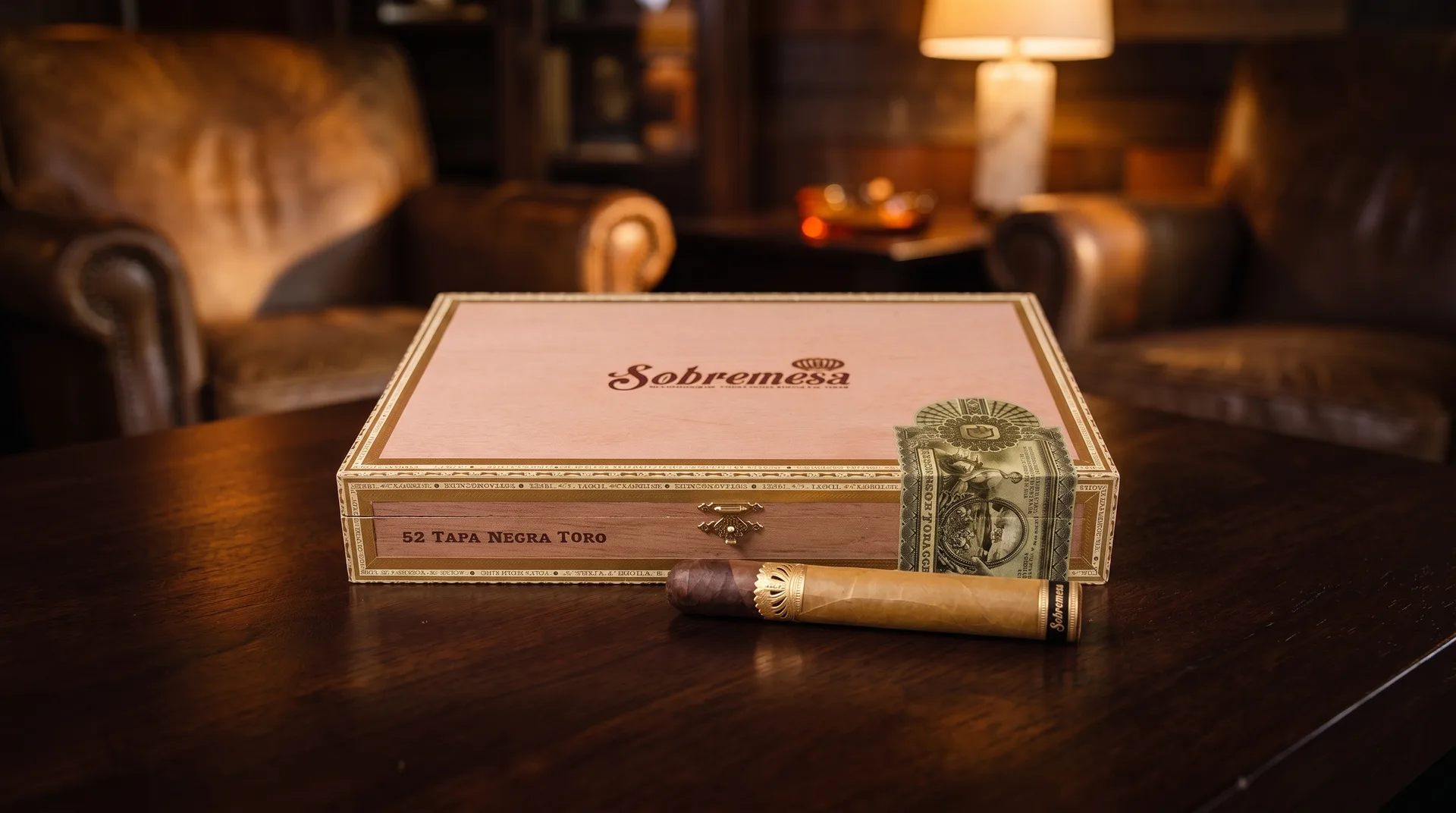
The Sobremesa Tapa Negra is a two-wrapper cigar from Steve Saka's Dunbarton Tobacco & Trust: the creamy Ecuadorian Connecticut shade blend of the Sobremesa Brûlée, finished with a dark Nicaraguan sun-grown wrapper over the cap, the section that rests on your palate. It ships in two vitolas, Corona Gorda (5 5/8 × 48, $16.25) and Toro (6 × 52, $16.95), in 13-count boxes rolled at Fábrica de Tabacos Joya de Nicaragua S.A. in Estelí. It debuted at the PCA Trade Show in New Orleans in April 2026 and began shipping to retailers in late June 2026.
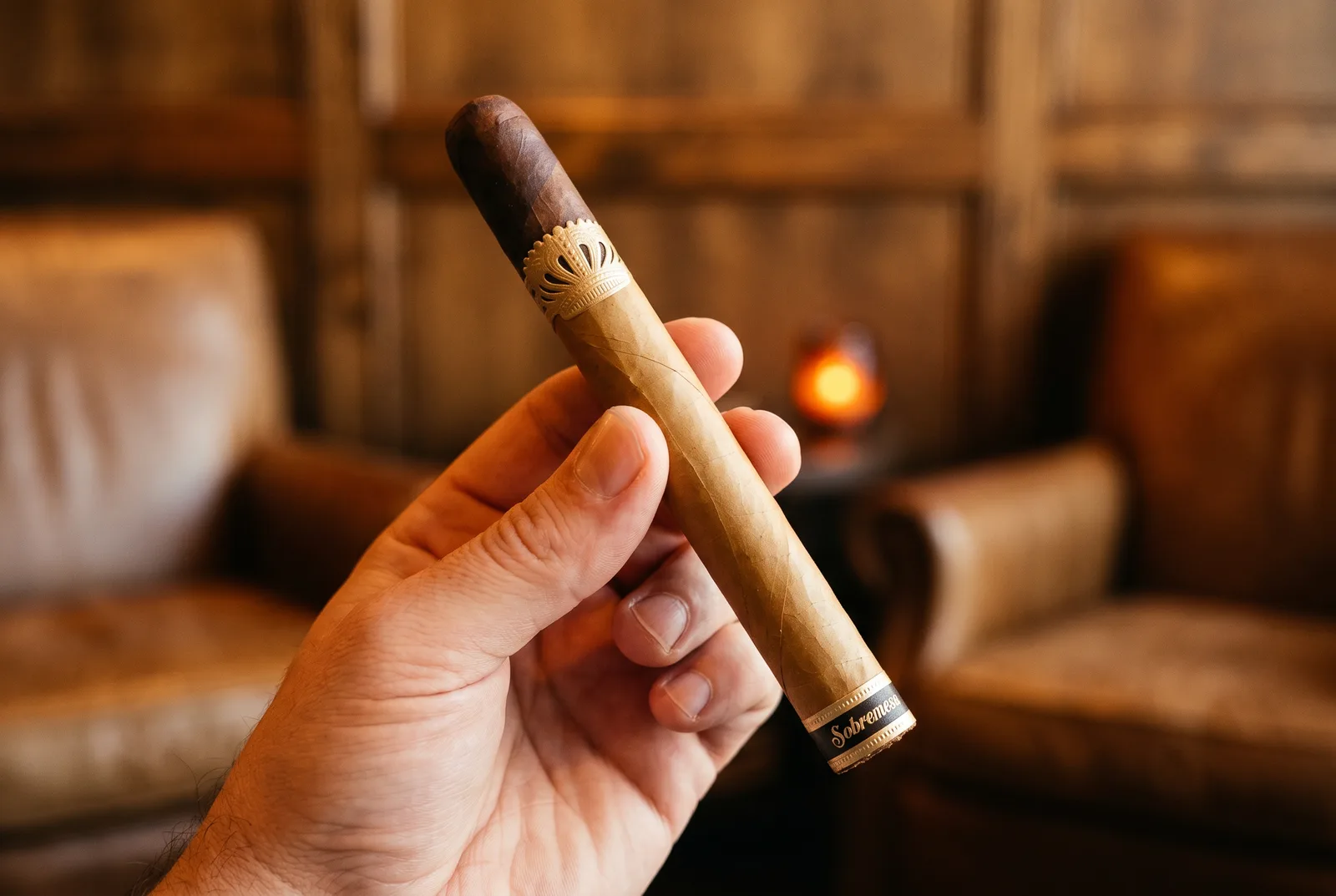
- The Sobremesa Brûlée blend, Ecuadorian Connecticut shade over a Mexican binder and Nicaraguan fillers, finished with a dark Nicaraguan sun-grown wrapper over the cap. Tapa negra is Spanish for black cap.
- Two vitolas: Corona Gorda (5 5/8 × 48, $16.25) and Toro (6 × 52, $16.95), both in 13-count boxes, rolled at Joya de Nicaragua in Estelí.
- The dark cap is the last tobacco to burn but the first thing you taste. Creamy smoke, peppery palate, same draw. Shipping since late June 2026.
THE BLEND
Underneath the black cap this is pure Sobremesa Brûlée, one of the creamiest Connecticut-wrapped cigars in the premium market: an Ecuadorian Connecticut shade wrapper over a Mexican binder and Nicaraguan fillers. Nothing under the hood changed, and that is the point.
The change sits at the top. The head of the cigar, the end you cut and hold in your mouth, wears a second wrapper: a dark, oily Nicaraguan sun-grown leaf. Drop a peppery cap on a harsh cigar and you get noise. Drop it on something this composed and it reads as seasoning, not static.
HOW THE TWO WRAPPERS WORK
The wrapper, the capa, is the most influential leaf on any cigar. On almost every cigar ever rolled, one leaf runs from foot to cap. The Tapa Negra splits that job in two, and the split is smarter than it looks.
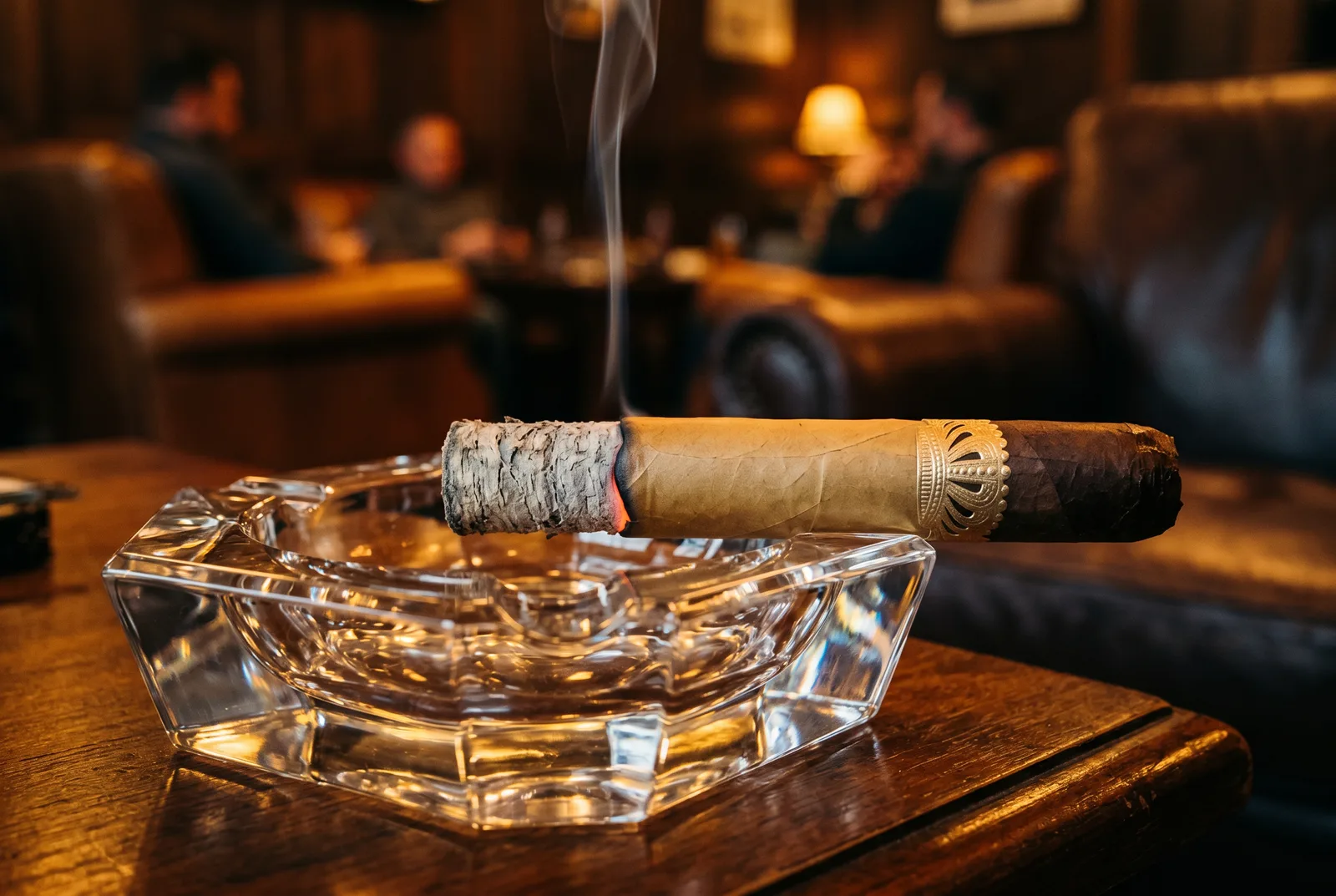
The dark section is the last tobacco to burn, but it is the first thing you taste. It rests against your lips and palate from the first puff to the last, so you get creamy Connecticut smoke and sun-grown pepper at the same time, from two different directions.
"The spicy Nicaraguan Sun-Grown capa being in contact with your palate adds great pepper notes.", STEVE SAKA, DUNBARTON TOBACCO & TRUST
Saka's stated goal was a cigar whose smoke stays creamy and smooth while the cap keeps things interesting. A relaxing smoke with an accent, not a powerhouse.
WHERE THE IDEA CAME FROM
This is not a trade-show gimmick. Saka first ran into the technique in the late 1990s working with Lew Rothman, one of the biggest cigar retailers of that era, and he has carried the idea for nearly three decades.
He shared it with his factory partners at Joya de Nicaragua years ago, and they built their Cabinetta line around it. Now the same Estelí factory rolls Saka's own version. The idea came home.
THE BLIND LABEL TAKE
If you love Connecticuts but wish they had a little more personality, this was built for you. If you write off mild cigars on principle, this is the one that might change your mind, the pepper on your palate keeps working while the smoke stays gentle.
The honest downside is price. At $16.25 to $16.95 this is not an everyday stick for most of us, it is a try-one-first purchase. Smoke it next to a regular Brûlée and see if you can isolate what the dark cap is actually doing, that is exactly the kind of blind-taste experiment this community was built on.
The Connecticut does the burning. The sun-grown does the talking.