
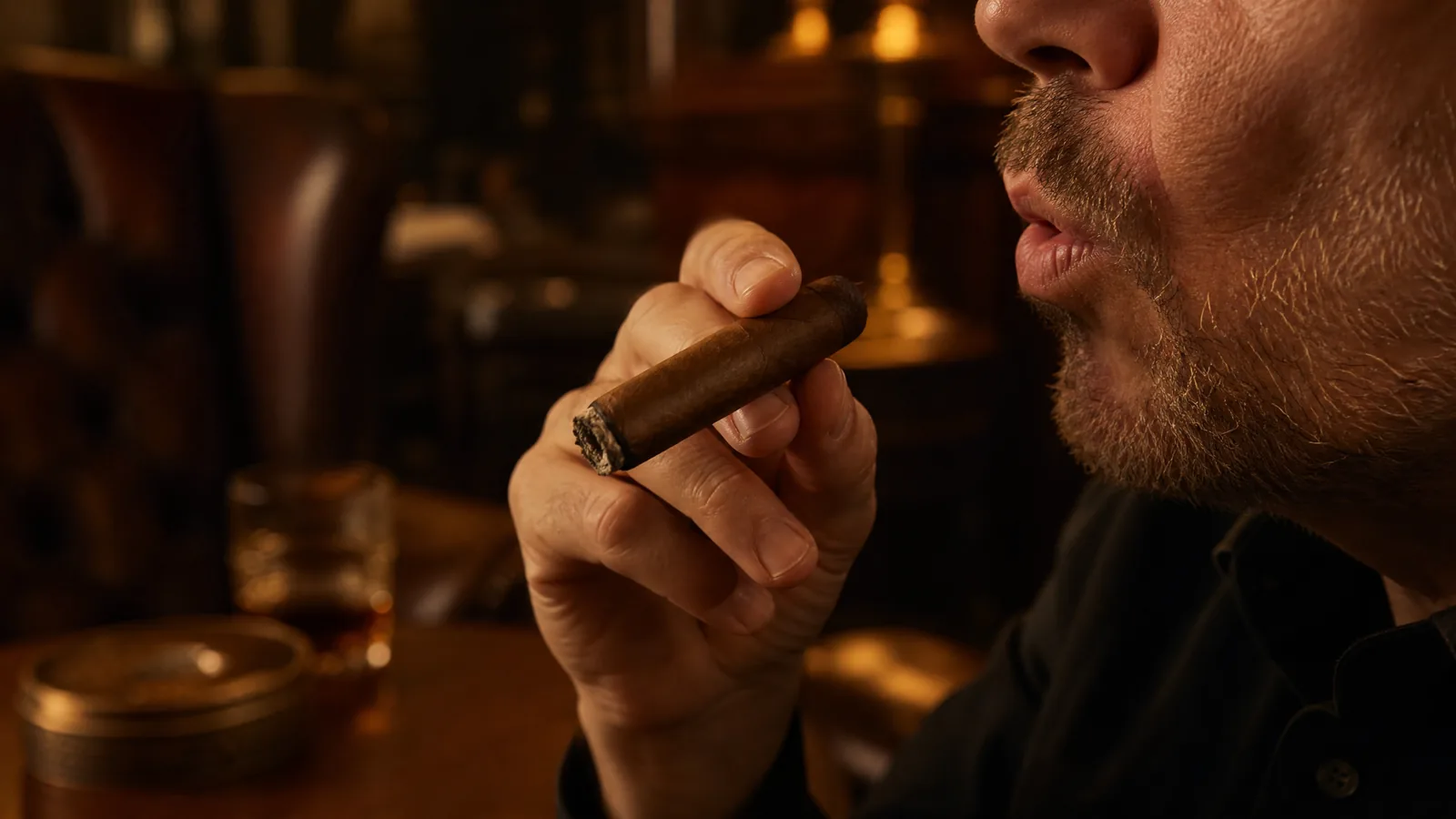
Purging a cigar means gently blowing air back through it, from the head out the foot, to clear the stale smoke, tar, and oils that build up inside as you smoke. It is the fastest way to reset a cigar that has turned bitter, and the whole move takes about five seconds. Most smokers pitch a cigar the moment the flavor turns. A lot of the time it isn't finished, it just needs a purge.
- Purging is gently blowing air back through a lit cigar instead of drawing on it. The reversed airflow pushes out the stale smoke, tar, and oils that build up inside the cigar as you smoke.
- The technique takes about five seconds: tap off the ash, let the cigar settle, blow softly through the head for one to two seconds, rest a moment, then go back to smoking slower than before.
- A purge can reset a bitter cigar, help a lazy burn correct itself, and set up a clean relight. It cannot turn a bad cigar into a good one.
Purging sits in a strange spot in cigar culture: half the smokers you meet swear by it, the other half have never heard of it. This is what a purge actually does, when it makes sense, the exact technique step by step, and the honest version of what it can and cannot rescue.
WHAT PURGING ACTUALLY IS
A purge is exactly what it sounds like. Instead of drawing smoke in through the cigar, you reverse the airflow and gently blow out through it. Air travels down the barrel, exits at the foot, and takes the stagnant smoke sitting inside the cigar out with it.
That's the whole move. No tools, no cutter, no flame required. You will see a thin stream of smoke leave the foot, and if the buildup was bad, the next draw often tastes noticeably cleaner.
Plenty of longtime smokers also purge at the very first light, blowing the first puff out through the cigar instead of tasting it. That clears any sulfur from a match or stray gas from a lighter before it ever reaches your palate. Same principle, different moment.
WHY A GOOD CIGAR TURNS ON YOU
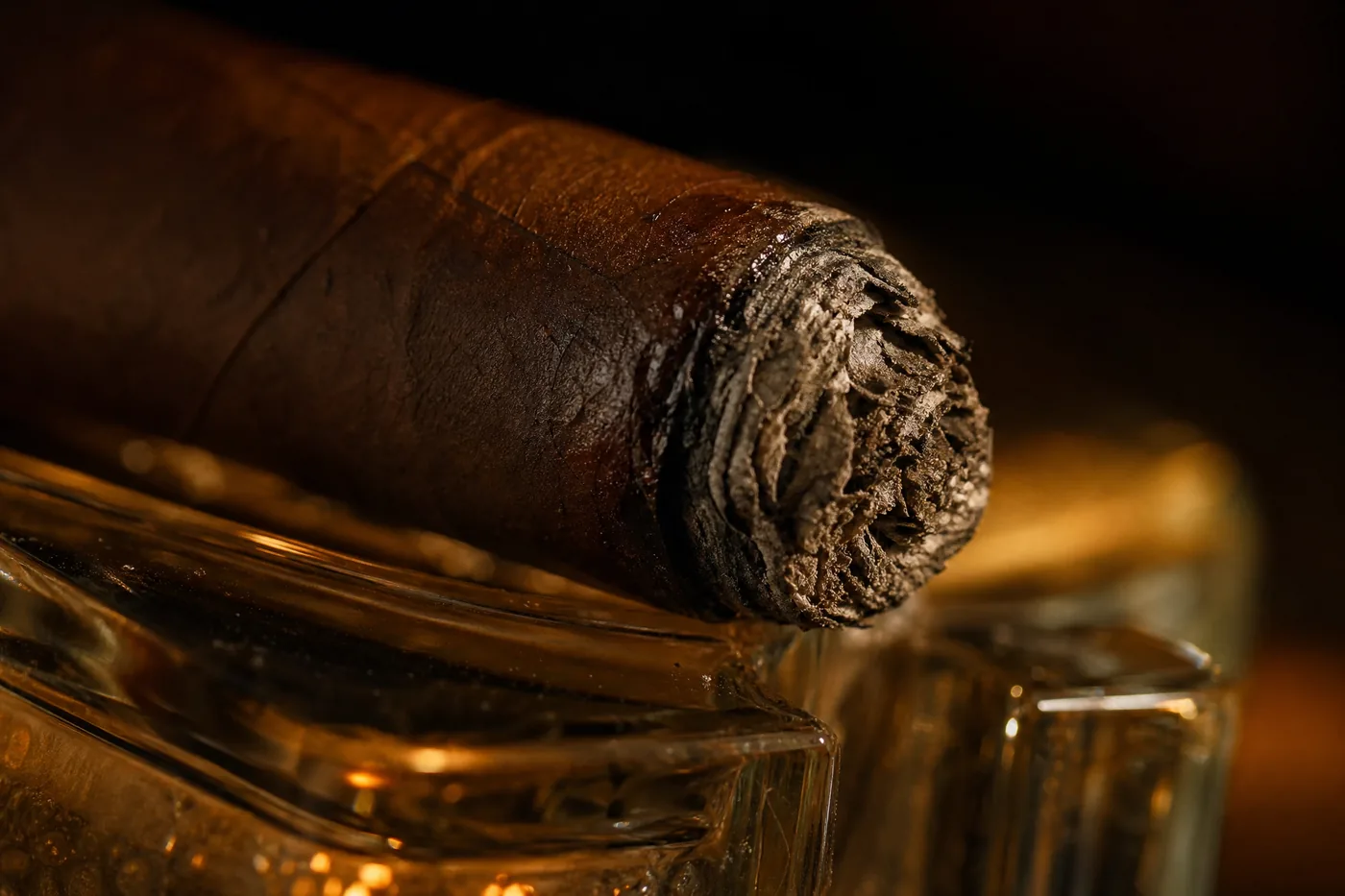
A cigar runs on heat, and heat leaves residue. Every draw pulls smoke through the unburnt tobacco ahead of the burn line, and some of that smoke condenses along the way, moisture, tar, and heavy oils settling into the leaf closest to your mouth. The deeper you get into a cigar, the shorter that filter gets and the more concentrated the buildup becomes.
That is why bitterness so often shows up in the final third. The flavors you love were built by the blender. The flavors that ambush you at the end were built by the smoke itself.
Pace makes everything worse. Puff too often and the cigar burns hot, and hot smoke goes harsh and bitter in a way that can be tough to walk back. A purge helps, but the better fix is the one nobody wants to hear: slow down. A cigar smoked at a sprint will turn on you no matter how many times you purge it.

THE FIVE-SECOND FIX, STEP BY STEP
1. Tap off the ash. Any loose ash on the foot is about to be in your lap otherwise. Roll it off gently against the edge of the ashtray.
2. Let the cigar settle. If you have been puffing quickly, give it a beat. Purging a cigar that is already running hot just pushes more heat through it. A cooler cigar purges cleaner.
3. Blow gently through the head for one to two seconds. The pressure you want is cooling a spoonful of soup, not blowing out birthday candles. Blow too hard and you can spray sparks, crack the ash, or push the cigar right out.
4. Watch the foot. A thin stream of smoke leaving the far end means the stale smoke is going with it. That's the confirmation you did it right.
5. Rest, then draw slow. Give it a few moments to cool, then take an easy draw. The difference should be immediate, cleaner, brighter, closer to the cigar you lit an hour ago.
That is the entire technique. Five seconds, no equipment, and nobody at the next table will even notice you did it.
THE RELIGHT PURGE
Where purging really earns its keep is the relight. A cigar that has gone out is holding a chamber full of stale smoke and gases, and if you relight and draw without clearing it, you get to taste all of it at once.
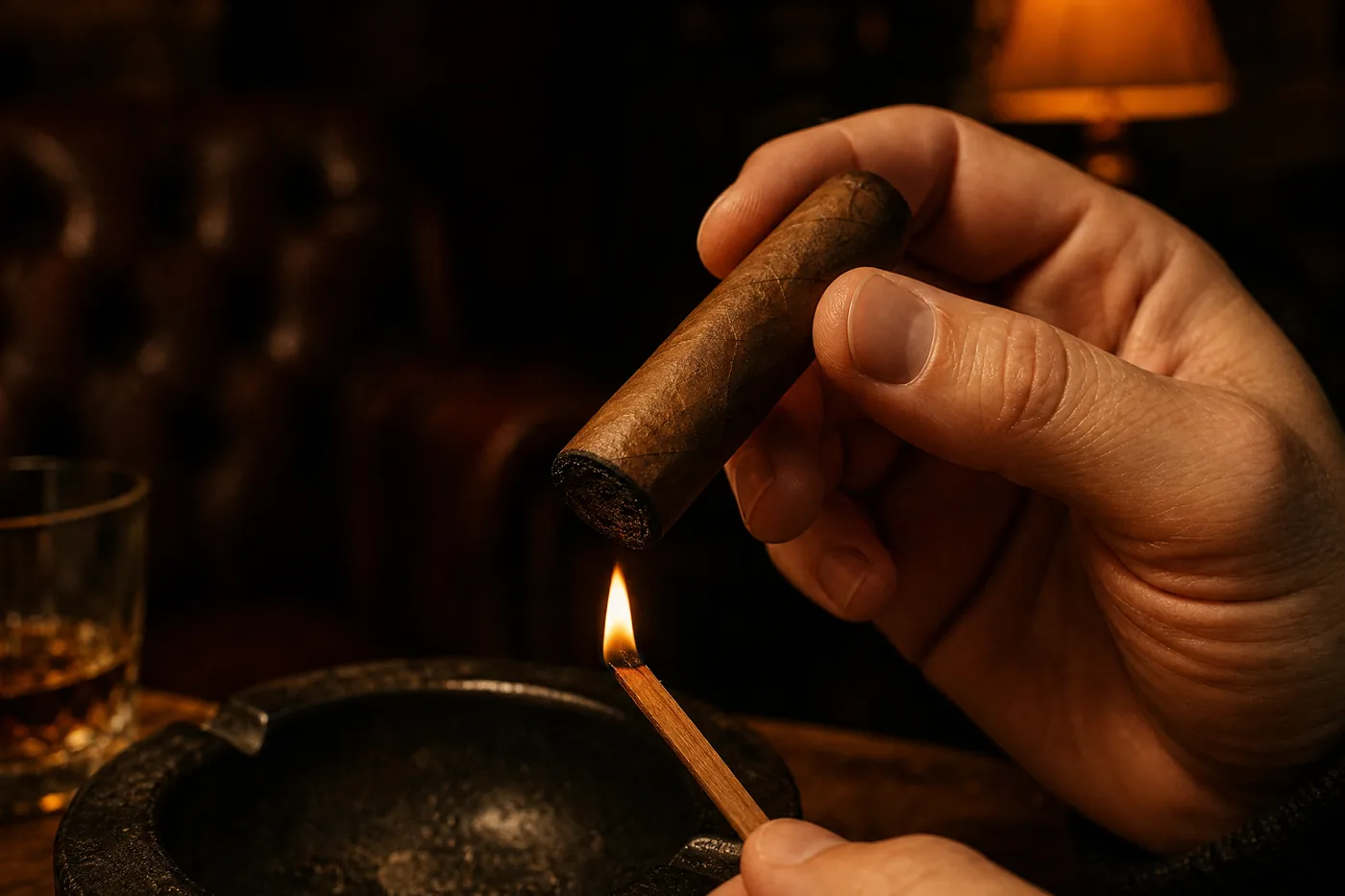
The sequence is simple. Before any flame touches the foot, blow through the cold cigar for a second or two and push the stale gases out. Knock the ash back behind the burn line, toast the foot, relight, and then purge once more. On that second purge you may see a brief flare at the foot as the old gases burn off. Don't let it startle you, that flare is the purge working.
Timing matters more than technique here. Most guides put the window for a clean-tasting relight at roughly 60 to 90 minutes after the cigar goes out. Inside that window, a purge and a careful relight can bring a cigar back convincingly. Past it, the oils keep souring and no amount of blowing changes the math.
CAN A PURGE FIX A BAD BURN?
Sometimes, and it's worth trying before you reach for the lighter. When a cigar starts to canoe, burning down one side while the other side loafs, a gentle purge pushes heat and oxygen across the whole foot at once. That can be enough to wake up the lazy side and let the burn straighten itself out without a touch-up.
If the canoe came from a construction flaw or a cigar that spent too long in a wet humidor, the purge won't save it. But as a first move it costs you five seconds, and a lighter touch-up costs you charred wrapper. Try the cheap fix first.
HOW OFTEN IS TOO OFTEN?
There is no official number, but the guides that put a figure on it generally land between two and five purges across a full cigar. That range fits how the buildup actually works: the benefit of a purge fades as fresh residue accumulates, so a purge at the halfway mark and another in the final third covers most smokes.
If you find yourself purging every ten minutes, the cigar is telling you something. Either you are smoking too fast, or the stick has a problem a purge was never going to solve. Purge to fix a moment. Don't purge to fight the whole cigar.
WHAT A PURGE WON'T FIX
This is the part most articles skip, so let's be honest about the limits.
A purge will not fix a cigar that was harsh from the first puff. That's the blend or under-fermented tobacco, and it was decided at the factory. It will not fix a plugged draw, that's construction. And if a defect fades after a purge and creeps right back a few minutes later, you have learned something useful: the problem is the cigar, not the smoke sitting in it.
A purge resets a good cigar having a bad moment. It does not turn a bad cigar into a good one.
An overheated cigar is the borderline case. Catch it early, purge, rest, slow down, and you can usually recover it. Let it cook too long and the bitterness sets in for good. The purge is a reset button, not a time machine.
THE GREAT PURGE DEBATE
Purging has believers and skeptics at the very top of the cigar world, which should tell you something about how much of this ritual is chemistry and how much is faith.
Walk into any serious lounge and you can start this argument in under a minute. Some of the most respected tobacconists in the world purge as a matter of habit and will happily demonstrate it for anyone who asks. Some of the industry's biggest names think the ritual is oversold, especially the version where you purge a half-smoked cigar so you can save it for the next day. The skeptics like to compare the day-after cigar to a beer that's been open all day. They are not wrong about that part.
Here's where we land. The mid-smoke purge costs nothing, takes five seconds, and often works, so use it. The purge-it-and-save-it-overnight move is mostly a setup for disappointment, a rested cigar keeps souring whether you purged it or not. If you have to put a great cigar down for the night, make peace with the goodbye.
MISTAKES TO AVOID
Blowing too hard. The number one error. You are not inflating a pool toy. Hard blowing scatters ash, sprays sparks, and can put the cigar out entirely.
Skipping the ash tap. Purge with an inch of loose ash hanging on and you will be brushing it off your shirt for the rest of the night.
Purging a cigar that's running hot. Let it settle first. Forcing air through an overheated cigar feeds the problem you are trying to fix.
Purging over your lap. Do it over the ashtray. The foot end is the business end, and on a relight purge it can flare.
Treating the purge as a license to smoke fast. It isn't. The purge buys back a bad stretch, it does not repeal the rules of pace. One draw a minute is still the smartest thing you can do for the flavor of your cigar.
GLOSSARY
| TERM | DESCRIPTION |
|---|---|
| Purge | Gently blowing air back through a lit cigar, head to foot, to expel stale smoke, tar, and accumulated oils instead of drawing them onto the palate. |
| Retrohale | Exhaling cigar smoke through the nose to engage the retronasal senses. Often confused with purging, but a completely different technique with a different purpose. |
| Foot | The open end of the cigar that you light. During a purge, smoke and gases exit here. |
| Head | The capped end of the cigar that you cut and draw from. During a purge, you blow through it. |
| Burn line | The ring where the cigar is actively combusting. Tar and oils accumulate in the unburnt tobacco behind it. |
| Canoeing | An uneven burn where one side of the cigar burns faster than the other, leaving a shape like a dugout canoe. A gentle purge can sometimes help it self-correct. |
| Toasting | Warming the foot of the cigar above a flame before the first draw, or before a relight, so the tobacco lights evenly. |
| Relight window | The stretch, commonly put at 60 to 90 minutes, during which an extinguished cigar can be purged and relit without a major loss of flavor. |
FREQUENTLY ASKED QUESTIONS
Everything you want to know about purging a cigar.