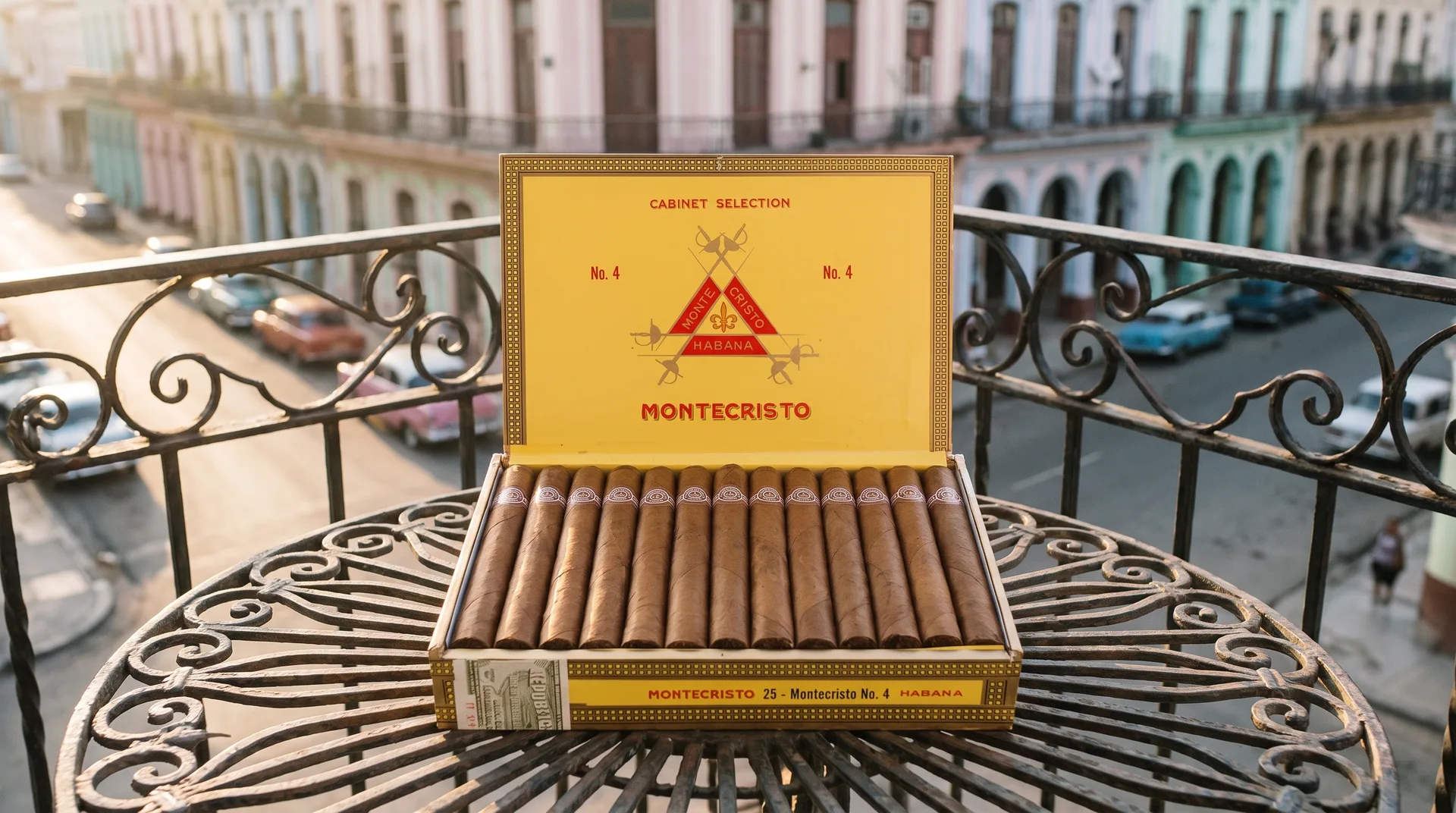
Some cigars you review to introduce them. This one you review to settle an argument. The Montecristo No. 4 is the best-selling Cuban cigar on the planet, the little petit corona that has outsold every Cohiba, Partagás, and Bolívar in the case for decades. If you have smoked exactly one Havana in your life, statistically this was probably it. So the only real question a review can answer is not “what is it” but “does the most famous small cigar in the world still earn the reputation.”
The Montecristo No. 4 is a Cuban petit corona from Habanos S.A., factory-named Marevas, measuring 129 mm × 42 ring (5⅛ × 42). Every leaf is Cuban, grown in the Vuelta Abajo zone of Pinar del Río, rolled entirely by hand as a long-filler cigar. One quick, important note before we go further: this is the Cuban Montecristo No. 4, not the Dominican one sold in the United States. Same name, same heritage, two completely different cigars.
- Montecristo No. 4 (Cuba, Habanos S.A.), 5⅛×42 petit corona, factory vitola Marevas. All-Cuban Vuelta Abajo tobacco, totally handmade.
- Classic Cuban flavor: cream and coffee up front, cocoa and cedar in the middle, roasted coffee and gentle pepper to close. Balanced medium, about 30 to 50 minutes.
- The world's best-selling Habano, and its most-faked. Price swings wildly: ~€7.70 in Spain, ~C$40 in Canada. Buy from a trusted source.
- BLC Rating: 90/100. The reference-standard Cuban petit corona. Consistency and balance over fireworks.
FROM THE PORCH
Today’s porch actually starts a long way from the porch. It starts in Cuba, at a government humidor, where I went to buy these Montecristo No. 4s at the source. I will be honest with you: the prices have come up a good deal from when I first started coming to the island, and there are so many great cigars on the market today that the No. 4 no longer wins by default the way it once did. But it is still the No. 4. So I brought a case back home with me.
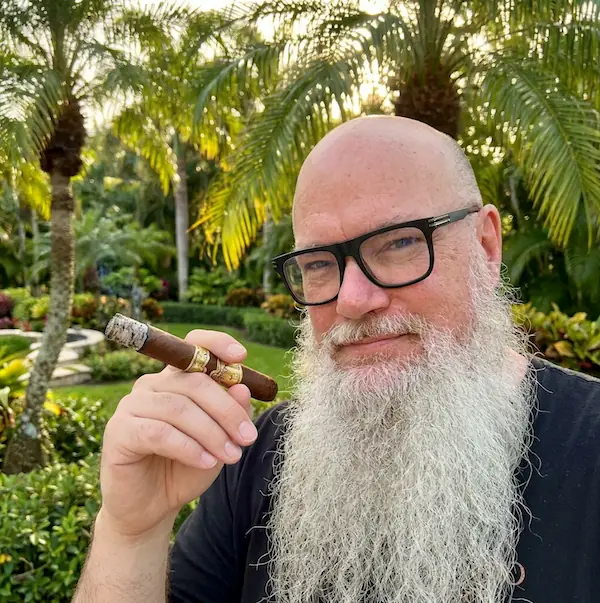
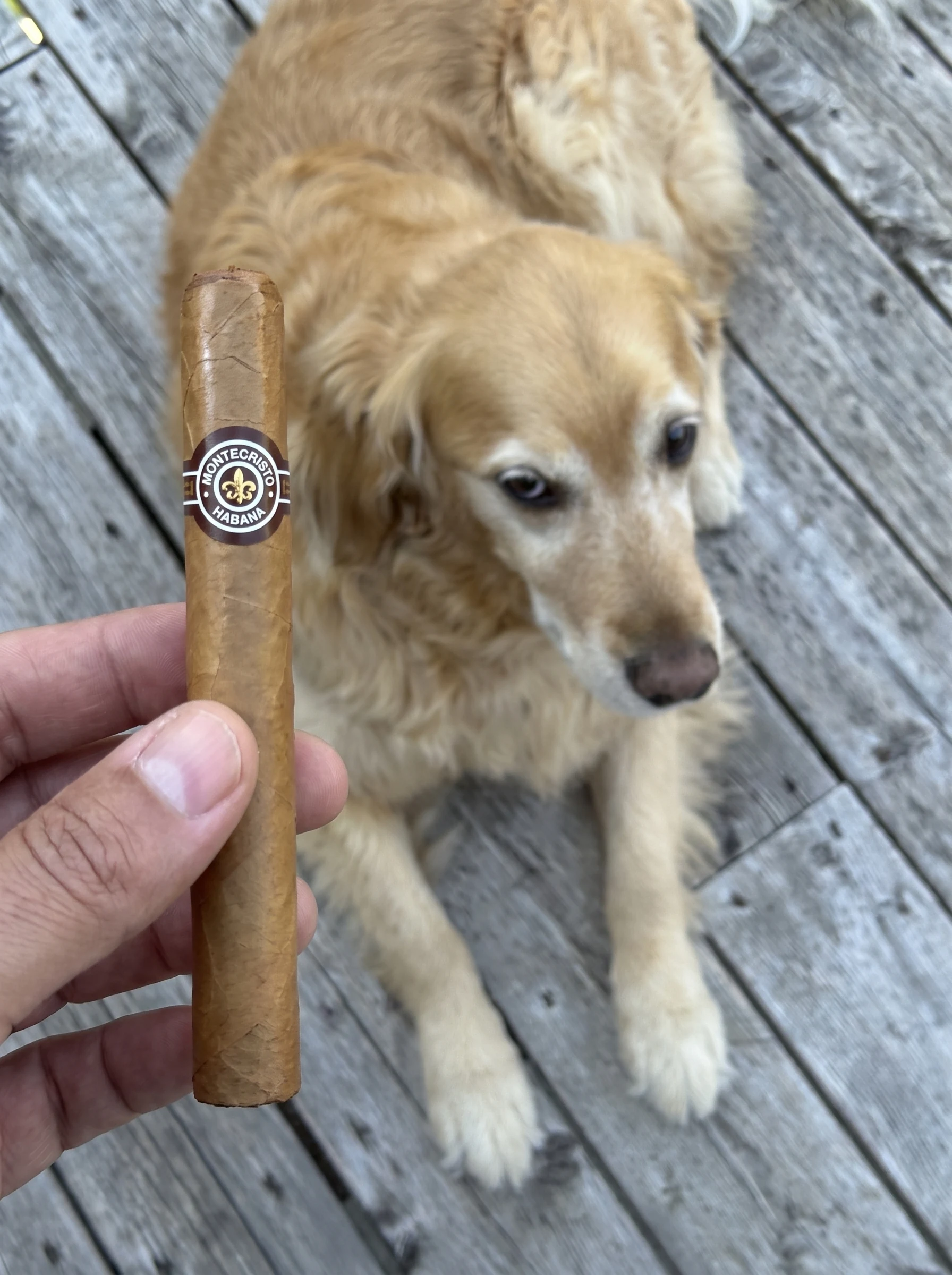
A few days later I cracked that case open, grabbed a couple, and went out to the porch with Dallas. We worked through two number fours, one right after the other, which is exactly the kind of afternoon a petit corona is built for, short enough that a second one feels like a good idea rather than a commitment. Dallas enjoyed it too, mostly because two cigars meant double the cookies. He has reviewed it in his own way, and the verdict is in: Dallas approved. Good enough for me. My notes are below.
BEHIND THE BLEND
In July 1935, Alonso Menéndez bought Havana’s Particulares factory and named his new marca after Alexandre Dumas’ The Count of Monte Cristo, reportedly the rollers’ favorite novel, read aloud on the factory floor by the lector. The marca launched with five numbered sizes, and it was the little No. 4 that became the volume king of the entire Cuban catalog. There is no celebrity blender here, the No. 4 is an institutional house blend, owned by Habanos S.A. and maintained since 1935 by successive tasting commissions at the marca’s mother factory, H. Upmann in Havana. Every leaf is Cuban, Vuelta Abajo wrapper, binder, and filler rolled totally by hand, and the blend’s whole job is continuity, keeping the world’s best-selling Habano tasting the way it has for generations.
BLC BLEND BREAKDOWN
BLEND SPECS
ONE CIGAR, WILDLY DIFFERENT PRICES
The single most important thing to know before you buy: where you buy changes almost everything.
That spread is not a rounding error, it is the whole buying strategy. The exact same cigar that costs under eight euros in a Madrid tobacconist can cost three to four times that in a Canadian shop once taxes, import, and scarcity pile on. If a price looks too good to be true in a market where these are normally expensive, treat it as a counterfeit warning, not a bargain. More on that below.
THE NUMBERED LINE
The No. 4 lives inside Montecristo’s founding numbered series, the Línea Clásica. Here is where it sits, and the one cigar people most often confuse it with.
| VITOLA | SIZE | FORMAT |
|---|---|---|
| Montecristo No. 1 | 6⅜ × 42 | Lonsdale |
| Montecristo No. 2 | 6⅛ × 52 | Pirámide |
| Montecristo No. 3 | 5⅝ × 42 | Corona |
| Montecristo No. 4 - reviewed | 5⅛ × 42 | Petit Corona |
| Montecristo No. 5 | 4 × 40 | Half Corona |
| Montecristo Petit Tubos | 5⅛ × 42 | Petit Corona (tubed) |
The No. 4 ships in dress boxes of 25 and 10 and in smaller cardboard packs. If you want this exact vitola in an aluminum tube, that is the Petit Tubos, the same 5⅛×42 Marevas, just tubed, sold as its own SKU. There is no tubed “No. 4” proper. Worth knowing, because shops sometimes blur the two.
THE COLD DRAW
The No. 4 tastes better than it looks, it always has. The wrapper is a natural claro-to-colorado, often a little coarse and veiny, honest rather than flawless, this is a high-volume cigar, not a boutique showpiece. The pre-light aroma off the foot is hay, cedar, and a light barnyard sweetness. A straight cut opens a draw right in the pocket, and the cold draw gives up cream, faint raisin, and that unmistakable Cuban twang at the edges. It smells like a Havana before it is ever lit.
BLC CIGAR PROFILE
Burn: even and cool with a solid gray ash, Cuban QC varies box to box and these two behaved.
Draw: right in the pocket off a straight cut, no fight in it.
The shape of this cigar is balance, not drama. It picks a small, classic set of notes, cream, coffee, cocoa, cedar, and moves through them smoothly rather than reinventing itself every inch. It is more elegant than complex, and that is the point. This is the blend an entire category is measured against.
THE FIRST THIRD
The opening is cream and coffee in easy balance, the two notes trading the lead over a bed of light wood and a soft, natural sweetness. The smoke is smooth and cool, the retrohale carries only a polite tingle of pepper, and there is that faint sour-citrus “tang” at the edges that regulars will recognize as pure Montecristo. It is a gentle, welcoming start that tells you exactly what kind of cigar you are holding.
THE SECOND THIRD
The middle deepens. Cocoa and cedar step forward, a pronounced earthiness settles in underneath, and the sweetness dials back from cream toward something more like toast and black tea. Spice stays restrained and well-mannered. This is the most “Cuban” stretch of the cigar, that earthy, cedary core is the flavor people are actually chasing when they say they want a Havana.
THE FINAL THIRD
The last stretch is the richest. Roasted coffee and a darker chocolate come forward, a gentle pepper rises on the retrohale to push against the sweetness, and the earthy core holds firm to the end. Keep the pace slow and it closes clean, warm, and satisfying; push it hard and a small cigar will get hot, as any petit corona will. Total time landed a little under the hour, the perfect after-dinner, after-coffee length.
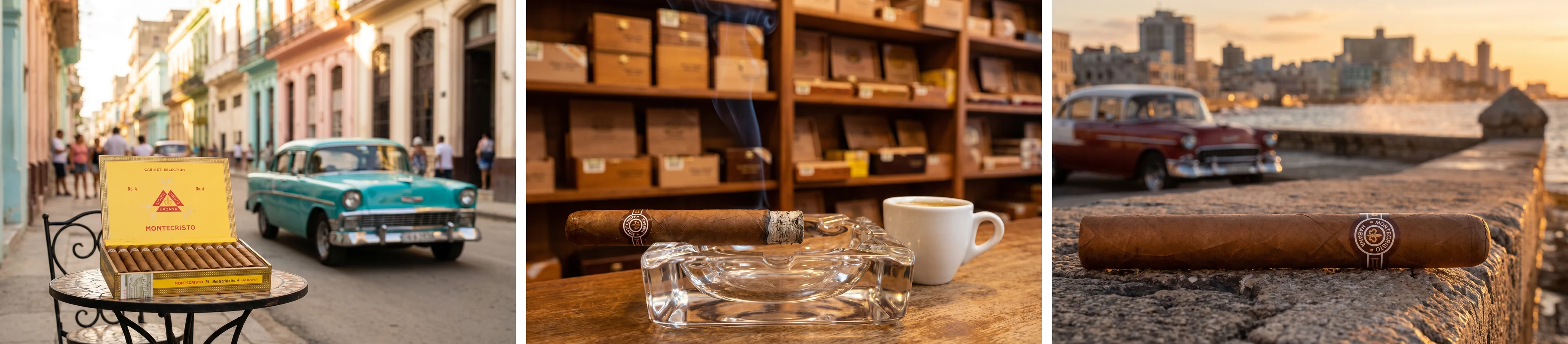
HOW TO SPOT A FAKE MONTECRISTO NO. 4
Being the best-selling cigar in the world comes with a curse: it is also the most counterfeited. If you are paying real money for these, learn the band and the box, because that is where fakes fall apart. This is genuinely the most useful thing in the whole review.
REAL-BAND & BOX CHECKLIST
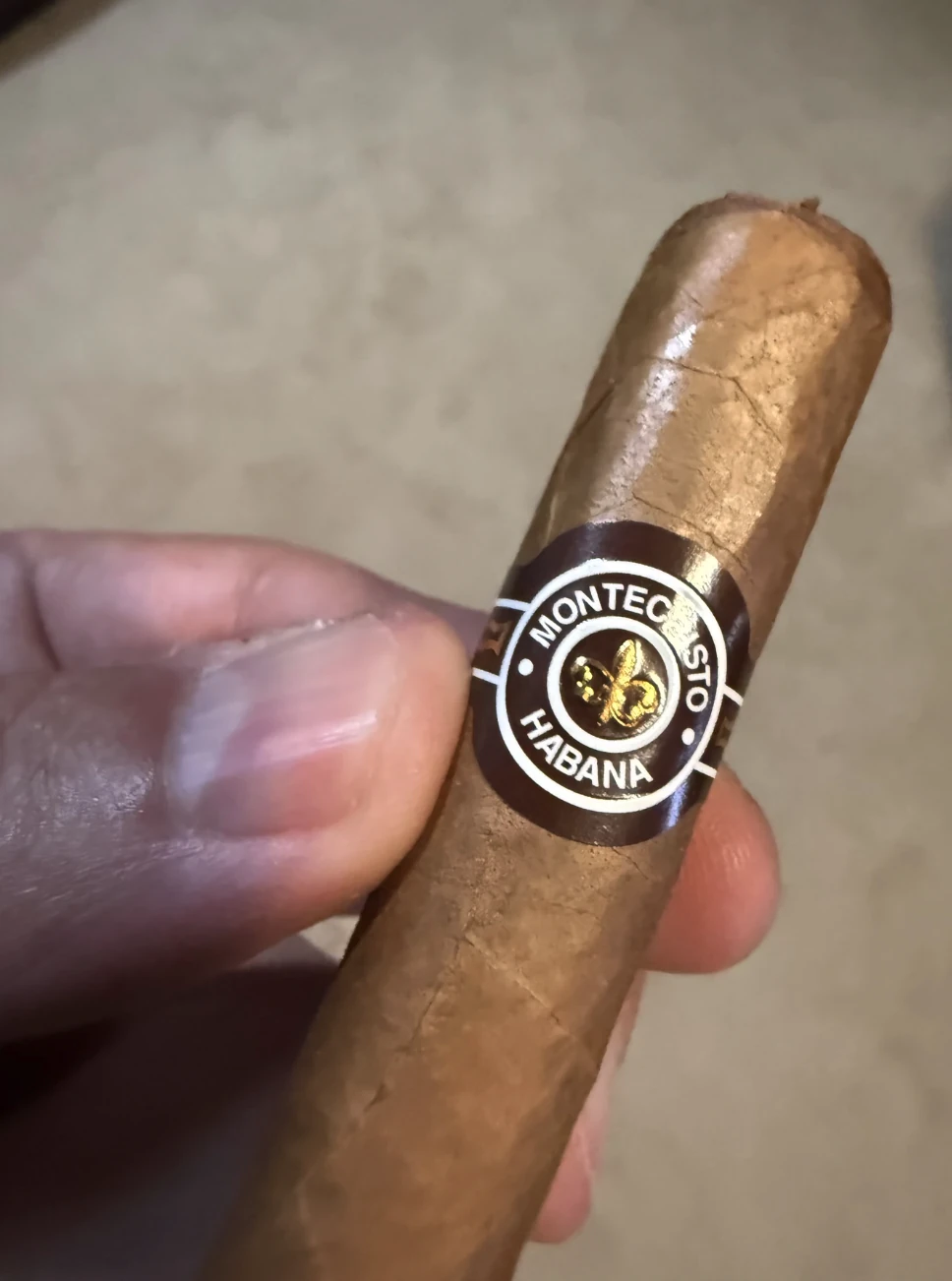
- The central fleur-de-lis is embossed GOLD on current bands. A white or flat fleur-de-lis usually means pre-2013 stock, or a counterfeit.
- The white circles, dots, and borders are crisply embossed and stark white, not printed flat or muddy.
- The band arms carry flat gold squiggle sword-lines; the ground is a glossy “bean” brown, not a dull matte chocolate.
- The box shows the green Cuban government warranty seal and the Habanos D.O.P. chevron sticker with a serial number and barcode.
- The base of the box carries a burned-in factory code and date stamp. No stamp is a red flag.
- Finally, price. A “Cuban Montecristo No. 4” priced far below its normal market is the oldest tell there is.
OVERALL RATING
BLC OVERALL RATING
Ninety is not a participation trophy for a famous name, it is what a balanced, classic, endlessly repeatable Cuban petit corona earns. The No. 4 is the reference standard: cream and coffee, cocoa and cedar, delivered with more polish than complexity. The only two things holding it back from higher are Cuban quality-control variance box to box, and a price that can be either a steal or a gouge depending entirely on your postcode. Smoke one at least once. You should know what the benchmark tastes like.
WHO GRABS THIS CIGAR
Honestly? Everyone, once. If you have never smoked the best-selling Cuban cigar in the world, that is a gap worth closing, and the No. 4 is the friendliest, most affordable way to close it. It is the ideal after-dinner smoke for the person who has 45 minutes and wants something classic, balanced, and unmistakably Havana in their hand.
Where to be careful: buy from a source you trust, use the band-and-box checklist above, and if you are ever in a market where these are cheap and legal, stock up there. Skip it only if you demand big strength or a cigar that transforms in every third, that is not this cigar’s job. The No. 4 is not trying to surprise you. It is trying to be right, every single time, and it mostly is.
FREQUENTLY ASKED QUESTIONS
Common questions about the Montecristo No. 4 (Cuba).